
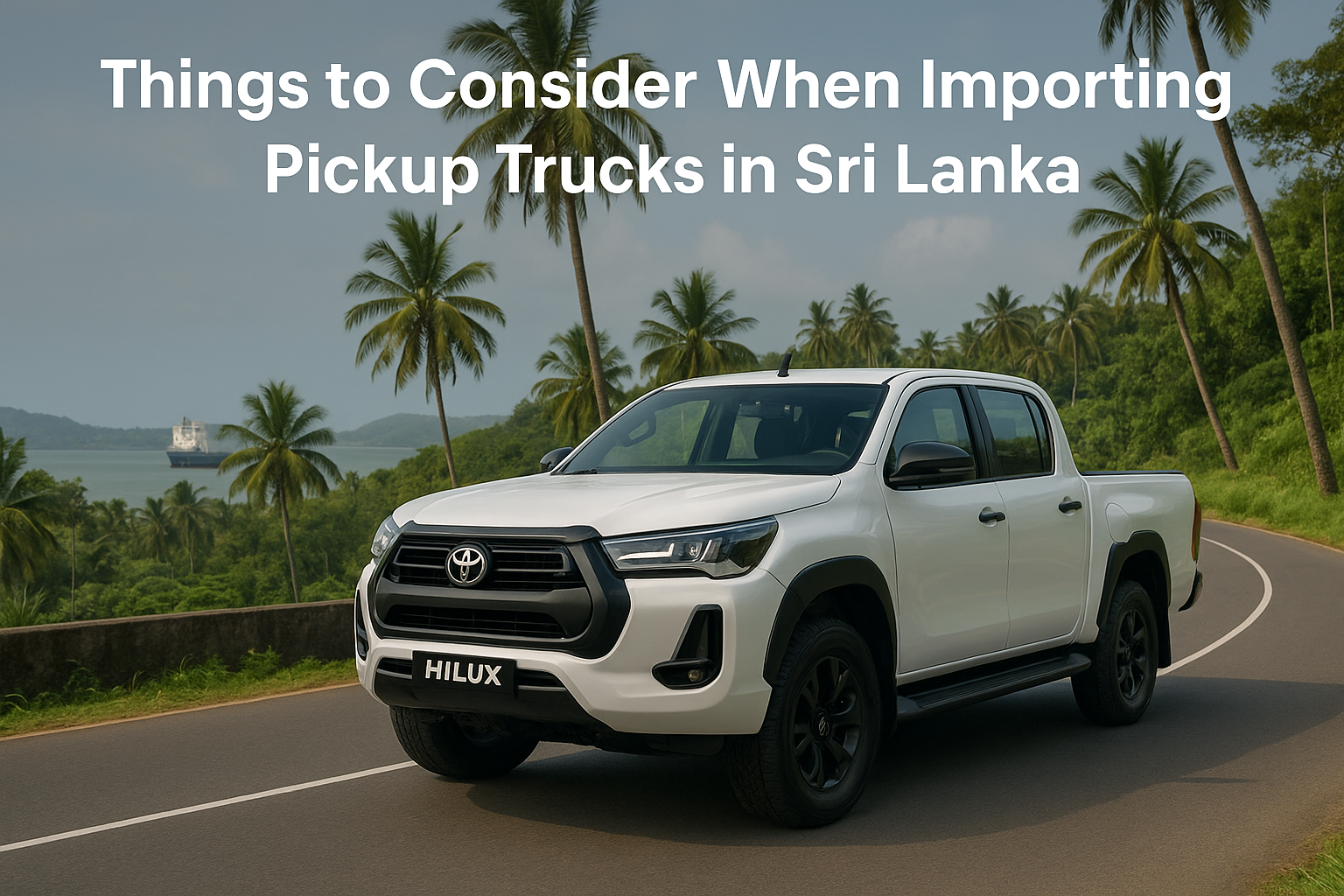
Things to Consider When Importing Pickup Trucks in Sri Lanka
Importing pickup trucks into Sri Lanka can be exciting, but it’s also a journey with many twists and turns. If you're diving into the world of Importing Pickup Trucks in Sri Lanka, here’s a friendly guide to help you navigate the process confidently.
Understand Sri Lanka’s Vehicle Import Regulations
First things first: you’ve got to know the rules. Sri Lanka permits vehicles only if they fall within strict age limits. Private motor cars and jeeps (including pickups) must be under about 3 years old, and other trucks slightly older, but you’ll need a special permit if that’s exceeded. You must import via a Letter of Credit issued through a bank, handle clearance with a Customs House Agent, and submit essential documents like the commercial invoice, bill of lading, and pre-shipment inspection certificate (customs.gov.lk). Taxes on vehicles are famously steep in Sri Lanka, and that's the next big piece of the puzzle.Choose the Right Pickup Truck for Your Needs
When thinking of imported pickups, it's not only about looks and performance. For example, if you're eyeing a Toyota Hilux, known for its durability and resale value, you also want to consider fuel type (diesel vs. petrol), engine size, and condition. Japanese used trucks are popular and usually reliable, but make sure they’re right-hand-drive and come with a JAAI certificate to meet Sri Lankan roadworthiness rules. New trucks offer warranty and novelty, but used models can offer great value, depending on your priorities.Check the Total Cost, Not Just the Purchase Price
Here’s where many get surprised: the taxes on vehicles in Sri Lanka make up a major chunk of the cost. You’re looking at:- Customs Duty: ~20% of CIF value
- VAT: 18%
- Luxury Tax: 60–120% if CIF hits 5–6 million LKR or above (this includes many pickups)
- Surcharge: 50% on Customs Duty (for private vehicles)
- Excise Duty: Plus other levies and port charges.
Verify the Condition and Authenticity
Before you get attached to that sleek pickup, check its credibility. Request a mileage certificate, JAAI inspection report, and export certificate, and confirm that the vehicle is deregistered. This ensures authenticity and helps prevent odometer fraud or hidden damage.Work with a Reliable Import Agent
Doing everything alone is exhausting. A good importer or agent guides you about trusted exporters (especially from Japan, Thailand, or Australia), handles paperwork and documentation, and helps avoid mistakes like misspelled names on the Letter of Credit. Simple errors can turn into major headaches at customs clearance.Plan for Spare Parts and After-Sales Support
Once your pickup arrives, spare parts and maintenance matter, especially for imported pickups like the Toyota Hilux. Thankfully, Hilux parts are relatively easier to find due to its popularity in Sri Lanka and nearby markets. Still, you’ll want to ensure local support for servicing and parts, particularly if it's a model imported, used, or older.Factor in Resale Value
Popularity influences resale value, and among imported pickups in Sri Lanka, the Toyota Hilux is legendary. It's sturdy, reliable, and often sells faster than its peers. For some perspective, Hilux is frequently called “indestructible,” beloved across rural and urban roads in Sri Lanka. That kind of reputation translates into strong resale value, something to keep top of mind.Is Importing the Toyota Hilux Profitable or Not?
Now, let's talk profitability. With Importing Pickup Trucks in Sri Lanka, and particularly the Toyota Hilux, your profit, or cost benefit, depends on comparing:- Total landed cost (CIF + taxes + clearance + transport)
- Local market rates for both used and new Hilux trucks
- Buy at a strong CIF price
- Factor in all duties and shipping
- Choose a Hilux model that holds value
Conclusion
Importing pickups into Sri Lanka, especially the Toyota Hilux, can be smart if you’re strategic. Here’s the quick checklist:- Understand regulations and age limits
- Choose the right pickup, ideally with JAAI certification
- Calculate the total cost, including all hidden taxes on vehicles
- Verify authenticity and condition thoroughly
- Use a reputable import agent
- Ensure parts & after-sales support
- Leverage resale value, Hilux shines here