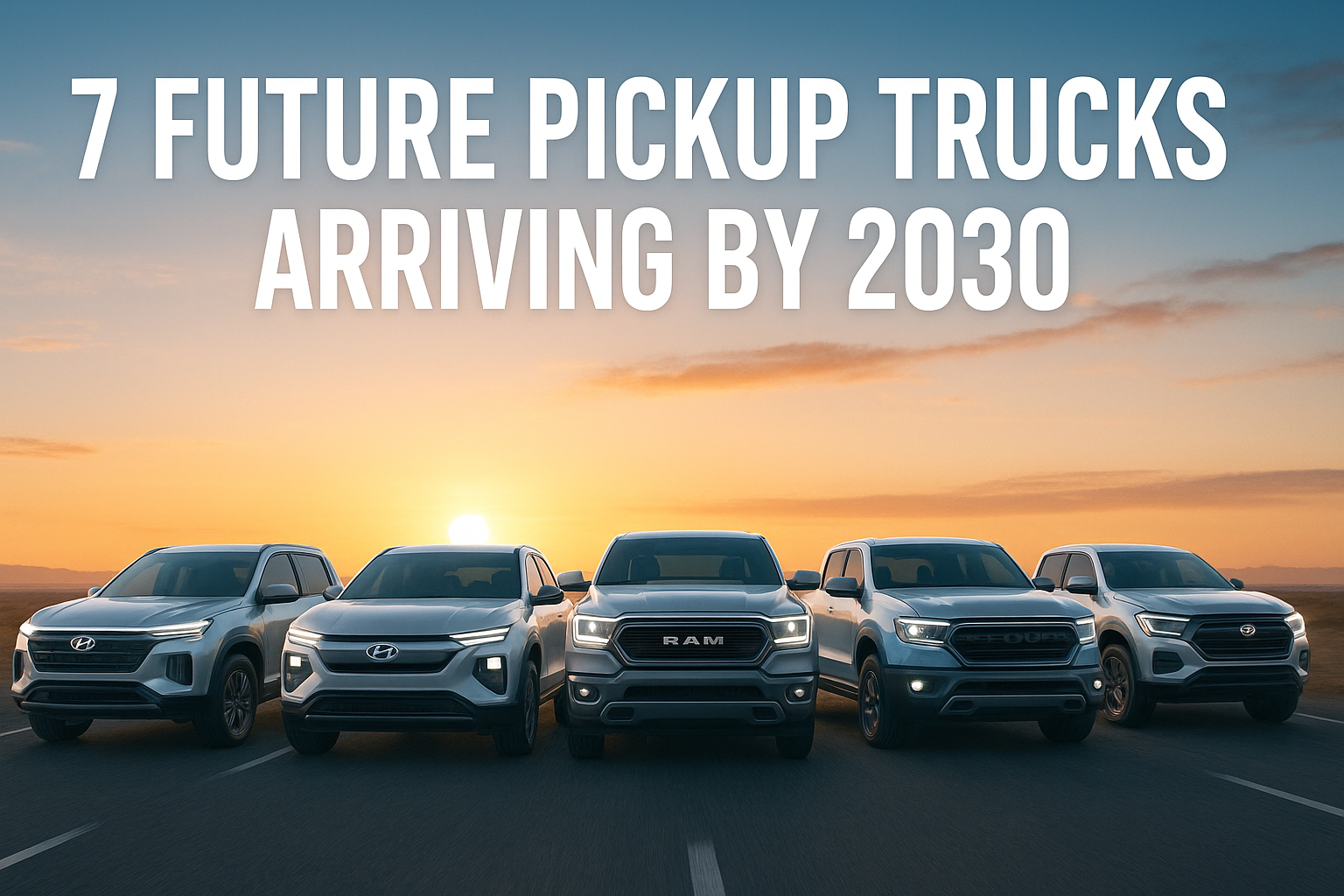
Pickup trucks are changing faster than many drivers expected. Fuelled by demand for capability, new tech, and, increasingly, electrification, the next decade will bring trucks that blend traditional toughness with surprising innovation. Here are seven pickup models (or nameplates) to watch between now and 2030: The Slate Truck, the Hyundai body-on-frame truck, the
Ford EV truck, the Ram Dakota, Scout Terra, the Toyota compact truck, and the Nissan and Mitsubishi truck. I’ll explain what makes each one notable, how they fit into the market, and why buyers should care.
Overall market context first: the global pickup truck market is expected to grow steadily through the end of the decade, with analysts forecasting meaningful gains in market value by 2030, a sign that automakers are continuing to invest in new pickups and variants.
Meanwhile, electrification of commercial and consumer trucks is accelerating rapidly: forecasts put the electric truck market on a high-growth trajectory over the next several years, reinforcing why we’ll see more battery-powered pickups by 2030.
1. The Slate Truck
The Slate Truck represents the clean-sheet, lifestyle-focused pickup concept many niche brands are chasing: compact footprint, modern design, and a focus on modular cargo solutions. Expect clever storage, urban-friendly dimensions, and mild-to-full-electric powertrain options. Its pitch: a truck that’s as comfortable on a city street as it is at a weekend job site.
2. The Hyundai body-on-frame truck
Hyundai’s move into traditional body-on-frame pickup territory signals a serious push into markets that prize towing and durability. Unlike crossover-style trucks, a body-on-frame architecture promises stronger towing, more robust aftermarket potential, and better off-road capability. Hyundai’s entry will likely bring competitive pricing, lots of tech, and thoughtfully engineered warranty and service support to gain buyers from established players.
3. The Ford EV truck
When we say “
The Ford EV truck,” we’re talking about Ford’s continued evolution of its electric pickup strategy, not just the first generation of the Lightning, but a family of electric trucks that will expand in capability and range through 2030. Ford’s EV efforts are central to the market’s electrification story, and while early volumes and adjustments have been part of the learning curve, expect steady improvements in range, charging integration, and software-enabled features. The brand’s push to make electric pickups mainstream is likely to influence prices, incentives, and the broader charging ecosystem.
4. The Ram Dakota
The revival of the Dakota nameplate, a mid-size Ram pickup positioned between compact and full-size models, is aimed squarely at buyers who want capability without the bulk of a full-size truck. Think modern comforts, a suite of driver aids, and powertrains tuned for a mix of efficiency and towing. For many consumers, the Dakota will be the practical “everyday truck” that still handles heavier chores when needed.
5. Scout Terra
Scout’s Terra model mixes retro-inspired styling with contemporary, all-electric engineering. Designed to appeal to outdoor enthusiasts, Scout Terra will likely prioritize long-range battery options, rugged suspension, and ample accessory compatibility for roof tents, racks, and off-grid power solutions. Its appeal will be as much lifestyle branding as it is capability.
6. The Toyota compact truck
Compact trucks are resurging, and the Toyota compact truck has the credibility of a brand known for reliability and resale value. Expect a practical, efficient package built for maneuverability in crowded streets and tight job sites, combined with Toyota’s reputation for ruggedness. Toyota may also offer hybrid or efficient ICE engines alongside a potential small electric variant to serve a global buyer base.
7. The Nissan and Mitsubishi trucks
Nissan and Mitsubishi have historically produced capable compact and mid-size trucks for global markets. The upcoming Nissan and Mitsubishi truck collaborations or joint platform efforts could yield cost-effective, globally-minded pickups with thoughtful local-spec tuning, ideal for regions where versatility and affordability matter most. This pairing could also accelerate electrified and hybrid variants in markets where both brands remain strong. Make sure to use the phrase Nissan and Mitsubishi truck for search visibility.
What this lineup means for buyers
Between lighter-weight compacts, revitalized mid-size nameplates, and serious electrification from legacy brands, buyers in the late 2020s will have more choices than ever. Whether your priority is towing, off-road capability, urban practicality, or cutting-edge EV tech, the truck landscape is broadening. Automakers are not only launching new nameplates but also rethinking ownership models, charging partnerships, and over-the-air software improvements, changes that will affect total cost of ownership and daily convenience.
Conclusion
By 2030, the pickup will wear many faces: the workhorse for contractors, the weekend warrior for adventurers, and the eco-minded commuter’s haul-ready EV. Keep an eye on the Slate, Hyundai’s traditional-frame offering, the ongoing evolution of the
Ford EV truck, the revived Dakota, Scout Terra’s outdoors focus, the Toyota compact truck, and any Nissan and Mitsubishi truck collaborations; together they map the truck market’s future: more diverse, more efficient, and surprisingly tech-forward.