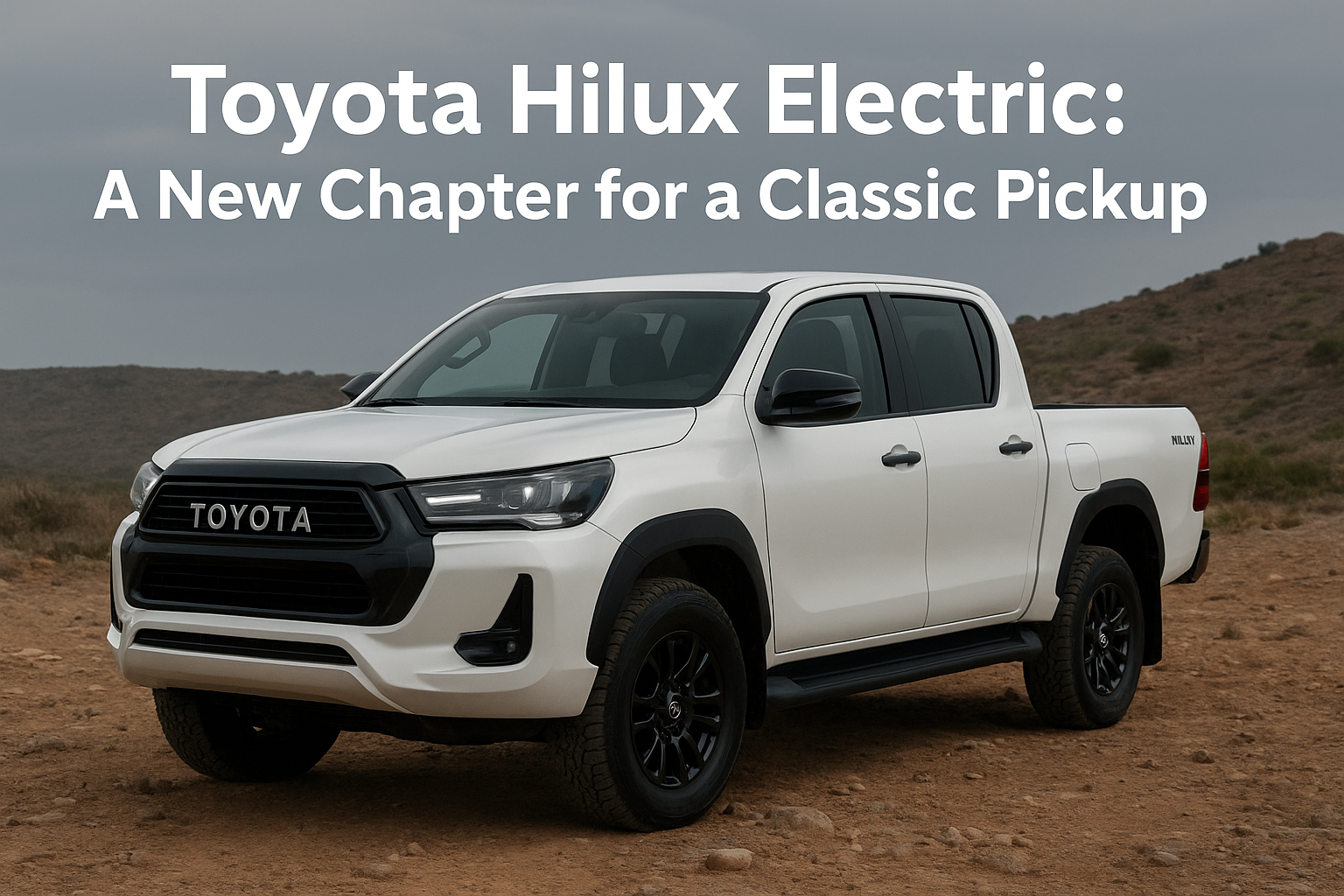
The automotive world is witnessing a quiet revolution as one of its most trusted and durable pickups steps into the electric era. The
Toyota Hilux electric truck brings the rugged, go-anywhere DNA of the Hilux into an era of zero-emission performance. For decades, Toyota Hilux pickup trucks have earned a reputation for reliability, toughness, and practicality. Now, the arrival of a battery-electric Hilux aims to combine that heritage with modern EV technology, delivering a capable, zero-emission utility vehicle for both work and everyday use.
Interior: Comfort Meets Utility
Inside the
new Hilux electric, the cabin reflects a thoughtful evolution. Drawing inspiration from Toyota’s latest luxury and utility models (including its SUV lineup), the interior layout has been modernized. The dashboard features a fully digital 12.3-inch instrument cluster alongside a similarly sized central touchscreen for infotainment and vehicle controls.
This digital upgrade brings convenience features such as multiple USB ports and wireless phone charging, aimed at enhancing daily usability, whether for a fleet driver, a tradesperson, or a family on a road trip. The cabin remains true to the Hilux’s utilitarian roots, with a layout that balances ruggedness and comfort, making the electric Hilux a practical driver for both city and off-road use.
The transition from traditional gauges and analog controls to a modern digital interface shows that Toyota seeks to transform the Toyota Hilux electric truck into a vehicle for today’s needs, without losing the character that has made Toyota Hilux pickup trucks legendary worldwide.
Power and Performance: Electric Strength With All-Wheel Drive
Under the skin, the Hilux electric retains the familiar body-on-frame architecture used by traditional Toyota Hilux pickup trucks. But instead of a diesel or petrol engine, it now packs a 59.2 kWh lithium-ion battery driving dual e-axles for a permanent all-wheel drive setup.
Torque output is rated at 205 Nm at the front axle and 268.6 Nm at the rear, delivering sufficient pull and traction, important for off-road driving or hauling loads. The dual-motor AWD system gives the electric Hilux a confident performance on varied terrain, promising to preserve the off-road and rugged capability for which
Toyota Hilux pickup trucks are known.
The instant torque delivery typical of electric motors should translate into good acceleration and smooth starts, a characteristic advantage over traditional combustion-engine pickups. For those who need dependable performance, whether for urban driving, work sites, or light off-road duties, the electric Hilux appears to strike a balance between electric efficiency and traditional pickup muscle.
Range and Charging: What to Expect (And What’s Still TBD)
According to
official figures, the Hilux electric truck offers a WLTP-rated driving range of approximately 240 km per charge. While that might seem modest compared to some long-range EVs, it’s a reasonable compromise for a body-on-frame pickup designed for mixed use, especially if deployed in urban/suburban settings or short-to-medium haul work scenarios.
Battery capacity is 59.2 kWh, matched to dual motors and all-wheel drive, a setup that helps the new Hilux maintain the off-road and utility credentials expected from a Toyota Hilux pickup.
As of now, Toyota has described the charging system as offering “best-in-class charging capabilities,” though exact charging times and speeds have not been made public. Real-world range will likely vary depending on load, driving conditions, and terrain, especially if the truck is carrying a heavy payload or towing. For many users, the 240 km range may suffice for daily tasks; for long-distance journeys, users might need to plan charging stops or rely on hybrid/ICE alternatives in the broader Hilux lineup.
Payload and Practicality: The Working Pickup Remains a Workhorse
A key strength of the
Toyota Hilux electric truck is that, despite electrification, it retains much of the practicality and utility that define Toyota Hilux pickup trucks. The body-on-frame construction remains intact, preserving the robustness and ruggedness associated with Hilux. Preliminary data suggest a payload capacity of around 715 kg and towing capacity of 1,600 kg. While these figures are lower than those often quoted for diesel-powered Hilux variants, they are still respectable for many real-world use cases, especially for light commercial work, city deliveries, small businesses, or recreational use.
The design also maintains a Double Cab body style across the lineup, making the electric Hilux suitable for both passengers and cargo, with modern comfort inside, and a combination of practicality and everyday usability.
In short, for users who want a pickup that balances electric efficiency with real-world utility, without sacrificing the tried-and-true toughness and versatility of the Toyota Hilux, this electric pickup gives a solid compromise.
Conclusion
The
Toyota Hilux Electric marks an exciting evolution for a beloved pickup, fusing its legendary durability with cutting-edge EV technology. With a thoughtfully designed interior and robust performance capabilities, it promises to meet the needs of both everyday users and professionals. While its range may seem limited for long trips, the Hilux electric delivers practicality and strength that align with its heritage. For those seeking a zero-emission workhorse, the electric Hilux stands out as a compelling option in the modern automotive landscape.