
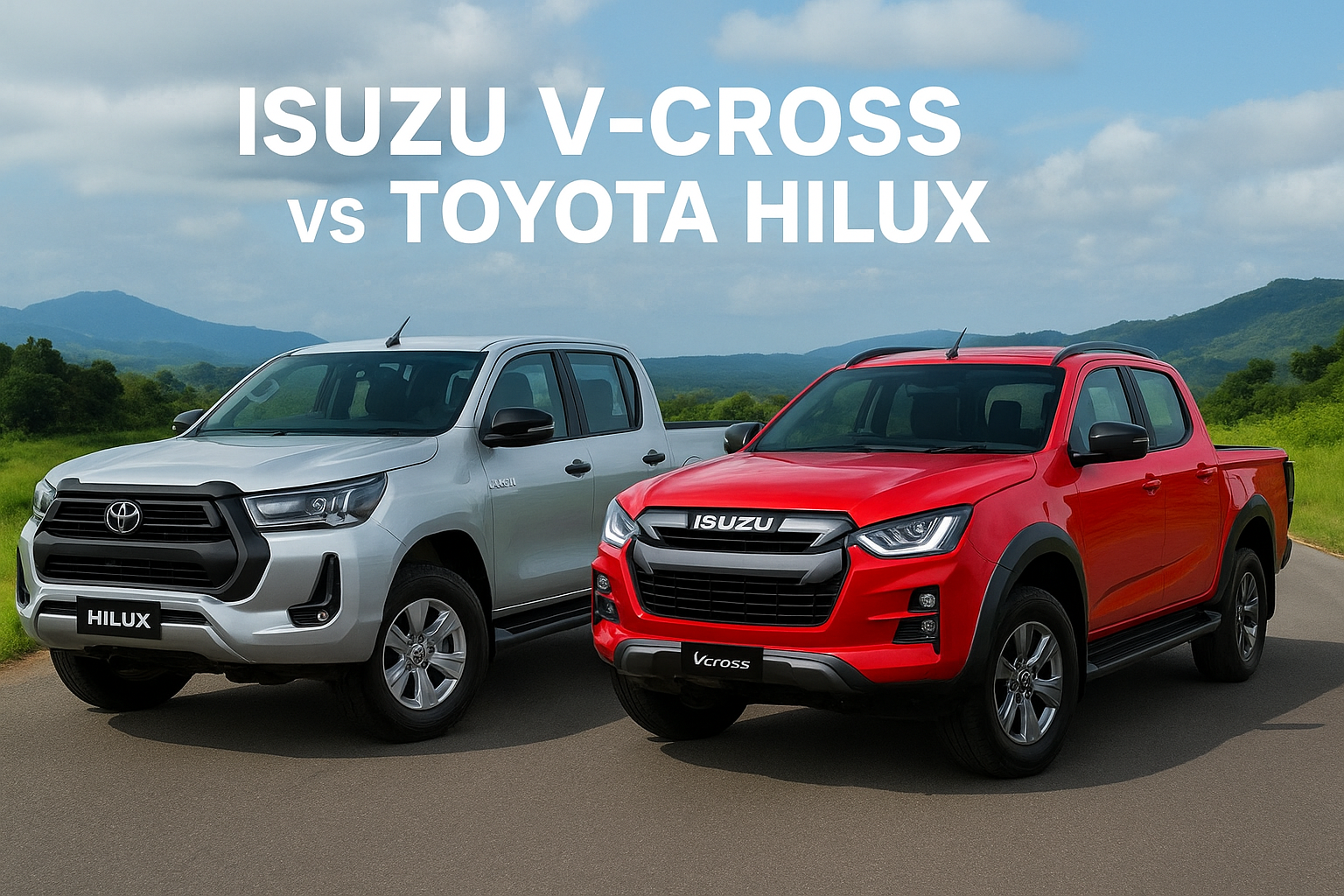
Isuzu V-Cross vs Toyota Hilux: Which One’s Right for You?
When it comes to pickup trucks that balance rugged performance with everyday usability, two names consistently dominate the conversation: the Toyota Hilux and the Isuzu V-Cross. Both models have built loyal followings worldwide, thanks to their reliability, strength, and versatility. But if you’re in the market for a truck and can’t decide which one fits your needs better, you’ve come to the right place. Let’s break it down in simple, practical terms.
Model Overview
The Toyota Hilux pickup truck is often seen as the gold standard of dependability. First introduced in the late 1960s, it has built a reputation for toughness, serving as both a family-friendly double cab and a heavy-duty workhorse. The Toyota Hilux double cab especially appeals to drivers who want room for passengers without compromising on capability. On the other hand, the Isuzu V-Cross 4x4 is a relatively newer contender in the lifestyle pickup category. While Isuzu has been around for decades, the V-Cross combines durability with modern styling aimed at younger professionals and adventure seekers. The Isuzu V-Cross leans more toward recreational use, with a sportier vibe compared to the Hilux’s “serious workhorse” image.Technical & Specification Comparison
Both trucks are impressive on paper, but let’s compare some key specifications side by side:- Engines: The Hilux usually comes with a 2.4L or 2.8L turbo-diesel, offering plenty of torque for towing and off-roading. The V-Cross offers a 1.9L or 3.0L turbo-diesel, depending on the market, balancing efficiency with power.
- Transmission: Both provide options for manual and automatic gearboxes, with 4x4 systems standard in most trims.
- Dimensions: The Hilux tends to have a slightly larger payload capacity, making it the better choice for those needing to haul heavy loads. The V-Cross, meanwhile, offers wider cabins that feel more spacious.
- Safety: Both trucks come loaded with safety features like ABS, stability control, and airbags, though higher trims of the Hilux offer Toyota’s Safety Sense package.
Performance & Driving Experience
Driving the Toyota Hilux pickup truck feels like handling a tank—it’s steady, powerful, and incredibly reliable on all terrains. It has a stiffer suspension setup, which helps it manage heavier payloads but can sometimes feel firm on city roads. The Isuzu V-Cross 4x4, in contrast, offers a smoother ride, especially for passengers. Its suspension is tuned for comfort, making long highway trips more pleasant. Off-road, it’s no slouch either. Its 4x4 system handles muddy trails and rocky climbs with ease, though heavy-duty haulers may prefer the Hilux’s extra torque.Features & Comfort
If comfort and features matter to you, both trucks have upped their game in recent years:- Hilux: The interior feels premium, with leather upholstery, touchscreen infotainment, and dual-zone climate control in higher trims. The double cab makes it suitable for families.
- V-Cross: Stylish interiors with soft-touch materials, large infotainment displays, Apple CarPlay, and Android Auto. It feels more like an SUV than a traditional pickup.
Cost of Ownership
Owning a pickup isn’t just about the sticker price—it’s about the long-term costs.- Fuel Efficiency: According to global fuel economy data, smaller displacement engines like the 1.9L V-Cross tend to offer better mileage, averaging between 12–14 km/l. The Hilux’s larger 2.8L engine averages closer to 10–12 km/l under mixed conditions.
- Maintenance: Toyota has a massive global service network, which often makes the Hilux slightly cheaper to maintain in the long run. Isuzu’s servicing costs are competitive, but the availability of parts can vary by region.
- Resale Value: Both trucks hold their value well. According to auto industry resale statistics, pickup trucks tend to depreciate more slowly than sedans, and the Hilux in particular is famous for its high resale demand.
Use Case Comparisons
So, which truck works best for you? Let’s look at different scenarios:- For Business Use: The Hilux, with its heavier payload capacity and stronger towing power, is the ideal choice for contractors, farmers, or logistics operators.
- For Families: Both double cab options work well, but the Hilux’s safety suite and slightly more spacious back row give it the edge.
- For Adventurers: If you’re into camping, off-roading, or weekend getaways, the Isuzu V-Cross offers better ride comfort and lifestyle-friendly features.
- For Daily Driving: The V-Cross’s smoother suspension makes it easier on city roads, while the Hilux can feel a bit stiff in bumper-to-bumper traffic.
Pros & Cons Summary
Toyota Hilux
Pros:- Exceptional reliability and durability
- Strong towing and payload capabilities
- Excellent resale value
- Stiffer ride in urban driving
- Slightly lower fuel efficiency
Isuzu V-Cross
Pros:- Comfortable, SUV-like ride quality
- Stylish and modern interiors
- Great value for lifestyle buyers
- Slightly less torque for heavy-duty work
- The service network is not as extensive as that of Toyota