
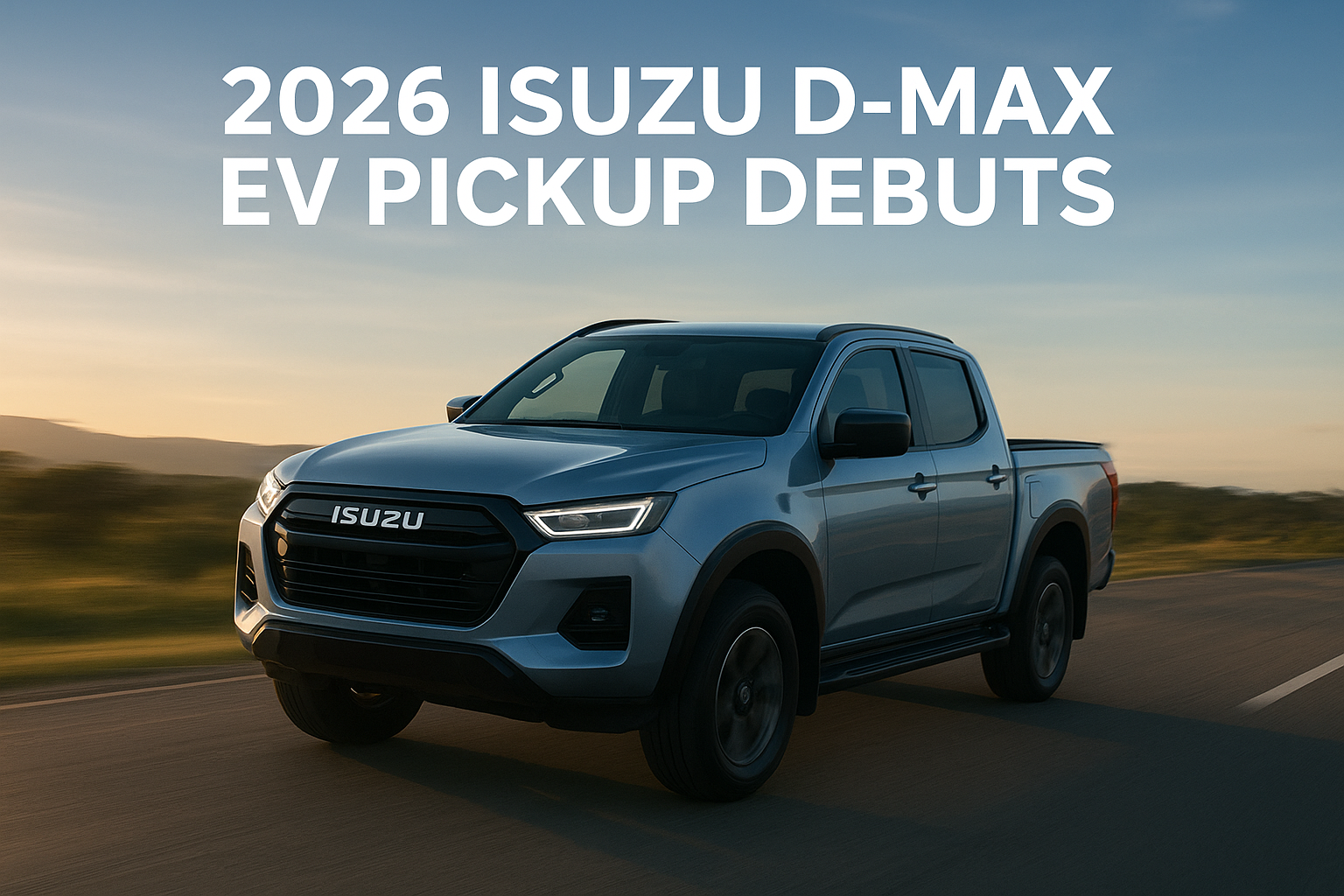
2026 Isuzu D-Max EV Pickup Truck Debuts With Dual-Motor Powertrain
Isuzu’s familiar workhorse has taken a decisive step into the electric era. The 2026 Isuzu D-Max arrives as a battery-electric variant that keeps the D-Max’s utility-first DNA while swapping diesel for a dual-motor electric drivetrain. For fleets and private buyers who know the D-Max for durability, this is Isuzu’s answer to tightening emissions rules, rising interest in electrified commercial vehicles, and the growing demand for zero-emission pickups.
Background & Context: From Ladder-Frame Legend to Battery Power
The Isuzu D-Max has long been a mid-size, ladder-chassis pickup known for reliability in tough work environments, a direct descendant of the company’s commercial-vehicle roots. The combustion D-Max is prized in markets from Southeast Asia to Africa and Europe for towing, payload, and off-road durability. The shift to an EV version preserves that rugged architecture but replaces the turbo-diesel drivetrain with an electrified system built for similar capability rather than just lifestyle appeal. Why now? Two big forces push Isuzu to electrify the D-Max. First, regulatory pressure in Europe and parts of Asia is accelerating the move to zero emissions for light commercial vehicles. Second, market trends show fleets and businesses increasingly valuing lower operating emissions and predictable energy costs, especially in urban and peri-urban deployments where EV infrastructure is improving. Isuzu’s strategy is to use Thailand, a regional production and export hub, to scale BEV pickup manufacturing and export to markets including Europe, the UK, and Australia.Dual-Motor Powertrain & Key Specs
At launch, the Isuzu D-Max EV Pickup uses a dual-motor setup (one motor per axle) that produces a combined 140 kW (about 190 hp) and 325 Nm of torque, delivering full-time four-wheel drive and a dedicated rough-terrain mode. The battery is a 66.9 kWh pack, and Isuzu quotes WLTP range at roughly 163 miles (263 km), a figure suited to regional commercial use and shorter intercity runs rather than long cross-country hauls. That same engineering retains heavy-duty capability: payload remains around 1,000 kg, and towing is preserved at 3.5 tonnes (3,500 kg).Design, Technology & Comfort
Outside, the D-Max EV keeps Isuzu’s rugged, functional pickup silhouette with modest EV cues rather than radical styling departures. Under the skin, the chassis is a strengthened version of the diesel D-Max ladder frame to preserve payload and towing geometry. Interior updates include an 8-inch infotainment screen, a 7-inch driver display, dual-zone climate control, and available leather, comfort, and tech aimed at operators who need a working cabin that’s not Spartan. Charging is modest by modern EV standards: AC charging up to 11 kW and DC charging at 50 kW (20–80% in about an hour).Market Launch, Pricing & Availability
Isuzu began production of the D-Max EV in Thailand with left-hand-drive exports targeted at continental Europe first, and a right-hand-drive UK launch scheduled for early 2026. Initial markets include Norway and other EU countries, the UK, Australia, and Thailand itself; Isuzu has signalled a wider rollout depending on demand. Pricing varies by market, but early UK pricing indications placed the D-Max EV at a premium over diesel equivalents, reflecting battery and low-volume production costs. Expect fleet incentives, tax breaks, or grant programs in certain markets to materially affect the total cost of ownership.Strengths and Potential Weaknesses
Strengths:
- True commercial capability retained: 1-tonne payload and 3.5-tonne towing keep the D-Max EV purposeful for business use.
- Full-time 4WD and a rough-terrain mode make it one of the few EV pickups designed primarily as a working vehicle rather than a lifestyle toy.
Weaknesses/questions:
- Range is modest for longer highway runs; WLTP 163 miles is workable for urban fleets but limits long-distance utility without fast charging support.
- Charging speed (50 kW DC) is slow compared to newer rivals offering much faster charging and larger battery capacities, potentially increasing downtime for commercial operators.