
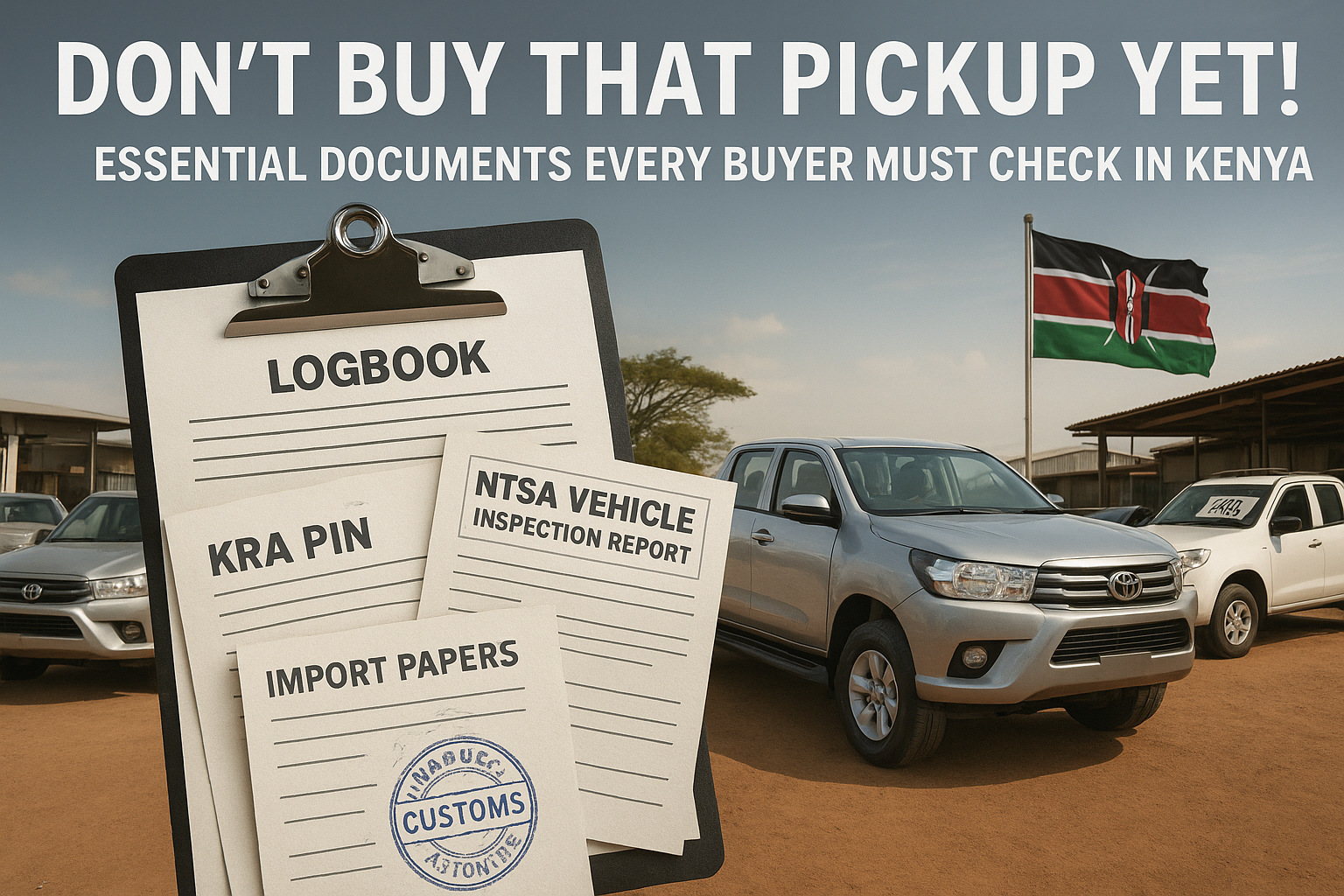
Don’t Buy That Pickup Yet! Essential Documents You Must Check First in Kenya
So, you're eyeing that rugged used pickup truck that looks like it can take on Kenyan roads like a champ. Whether it’s a reliable Toyota Hilux pickup truck or a tough Isuzu D Max, buying a pickup is a big deal, and it’s not just about the price, the horsepower, or how good it looks.
It’s about paperwork. Yep, the boring-but-absolutely-vital documents that can make or break your purchase.
To help you avoid costly mistakes, here’s a comprehensive guide to the must-check documents before buying a pickup truck in Kenya. Let’s keep it simple, practical, and yes, even a little fun.
The Logbook (Vehicle Registration Document)
Let’s start with the king of car documents in Kenya, the logbook.Why it matters:
This document proves who legally owns the vehicle. Whether you're buying a locally used model or plan to import pickup trucks in Kenya, the original logbook (not a copy) is non-negotiable.Check for:
- Match the logbook number and chassis/engine numbers
- Seller’s name matches their ID
- Proper stamp and date from NTSA if it's a recent transfer
NTSA Vehicle Inspection Report
This document confirms the pickup has passed Kenya's roadworthiness standards. For pickups over 4 years old, this report is a must-have.Why it matters:
- Confirms safety features are functional (brakes, lights, tires)
- Ensures the vehicle isn't a write-off or total loss import
- Required for ownership transfer through NTSA TIMS
Original Sale Agreement or Invoice
Whether you’re buying from a dealership or directly from the owner, don’t finalize the deal without a signed sales agreement or original invoice.Should include:
- Buyer and seller details (names, ID numbers, contacts)
- Description of the vehicle (make, model, VIN, mileage)
- Agreed price and method of payment
- Witness signatures
Why it matters:
This document protects both parties if anything goes wrong. It's especially crucial when dealing with a used pickup truck that’s seen a few owners.Import Documents (For Imported Pickups)
Planning to import pickup trucks in Kenya? Then make sure your seller (or clearing agent) has all these in hand:- Bill of Lading
- Certificate of Conformity (CoC) from KEBS or equivalent
- Import Declaration Form (IDF)
- Export Logbook or Deregistration Certificate from the origin country
- Customs Clearance Certificates
KRA PIN and Tax Payment Receipts
No PIN, no pickup. Both the buyer and seller must have valid KRA PINs for the NTSA to process any ownership change. You’ll also want to check:- Import duty, VAT, and excise receipts for imported pickups
- Receipts confirming IDF and Railway Development Levy payments
Transfer of Ownership Slip (Form C via NTSA TIMS)
Ownership doesn’t change hands just because money does. What you need:- Log in to NTSA TIMS
- Seller initiates the transfer request
- Buyer logs in and accepts the transfer